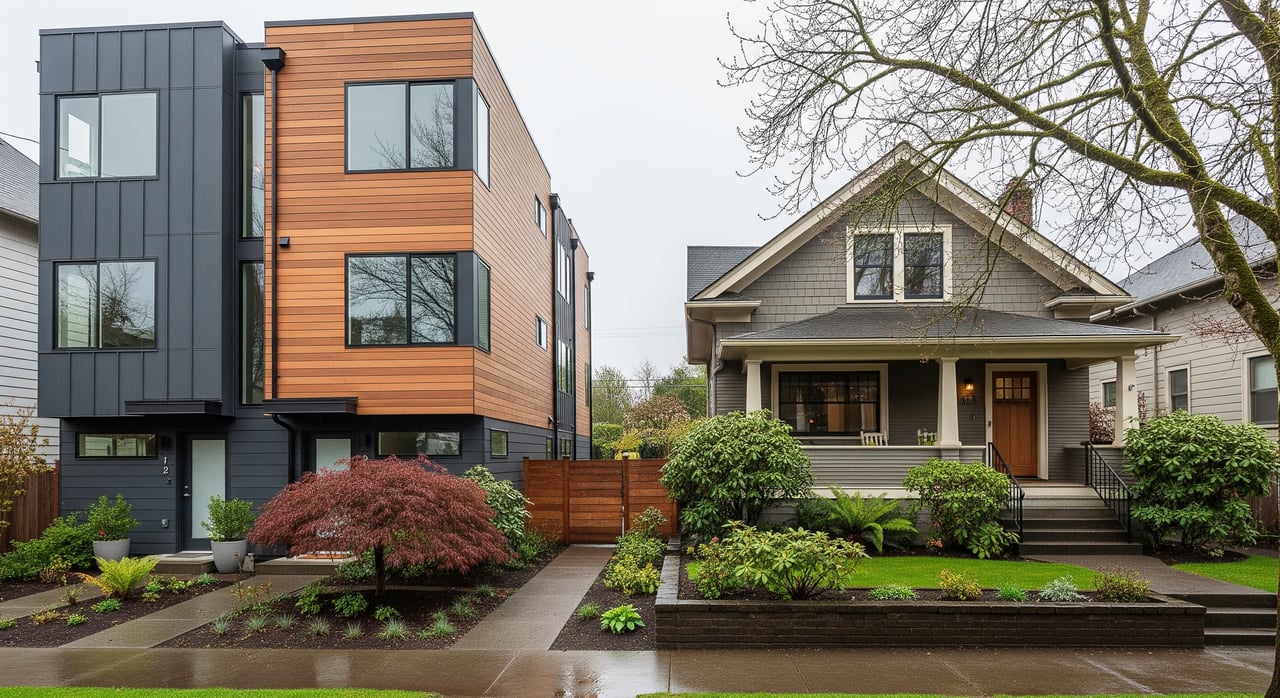
SE Portland Townhome vs House Living: How to Decide
October 16, 2025
October 16, 2025
Trying to decide between a townhome and a city house in SE Portland? You are not alone. Prices, maintenance, and lifestyle tradeoffs can feel complex when every block has a different vibe. In this guide, you will get clear, local steps to compare costs, financing, insurance, and day‑to‑day living so you can buy with confidence. Let’s dive in.
Recent data shows SE Portland’s median sold price hovering in the mid‑$500,000s as of mid‑2025, with meaningful variation by neighborhood and even by street. Inventory has improved at times since the 2020 to 2022 frenzy, giving you a bit more room to negotiate in certain pockets. Micro‑markets like Hawthorne, Division, Montavilla, and Sellwood can perform differently in the same month. Your best comparison will always be recent, property‑specific comps on the blocks you love.
Detached single‑family homes give you ownership of the land and structure. You handle exterior maintenance, the roof, and the yard. Townhomes can be fee simple or part of a condominium association; rules in the CC&Rs determine who maintains what and how it is insured. Portland’s Residential Infill rules have opened the door to more attached housing types, which is why you see new townhomes across SE corridors. You can review the city’s middle housing options on the Planning & Development site at the Residential Infill page: Portland residential infill options.
Property taxes in Multnomah County are based on assessed value and local rates, not just list price. If you are comparing a townhome to a city house, look at the levy code, assessed value, and any compression effects to estimate your bill. The county outlines how taxes are calculated here: Multnomah County property tax basics.
Many townhomes include HOA dues that cover exterior work, landscaping, and reserves. In Portland, fees often range from the low hundreds to 300 to 400 plus per month depending on amenities and scope, and special assessments can occur if reserves are low. Review budgets, minutes, and reserve studies carefully to understand risks. Local reporting has highlighted rising HOA costs and the impact of underfunded reserves in some associations.
If the townhome is legally a condominium, lenders apply project eligibility rules. FHA, VA, Fannie Mae, and Freddie Mac look at reserves, insurance, and owner‑occupancy ratios when deciding if your loan can be approved. Start early by checking project eligibility and, for FHA, whether Single‑Unit Approval is an option. Learn the basics here: FHA condominium project and single‑unit approval.
On resale, detached homes often benefit from land value and broad buyer appeal, especially for those who want private yards. Townhomes can appreciate well in walkable, supply‑constrained areas where buyers value location and low upkeep. Your outcome depends on exact location, HOA health, and design quality.
Condominiums and many townhome projects carry a master policy for the building and common areas. You typically buy an HO‑6 policy to cover interior finishes, personal property, liability, and loss assessment. Detached homes use HO‑3 or HO‑5 policies that cover the entire dwelling. Understand whether the HOA’s master policy is all‑in or bare‑walls before you set coverage limits. This guide explains the differences: Condo insurance vs homeowners insurance.
Portland is in an earthquake zone. Earthquake coverage is a separate endorsement that many owners add. Flood risk varies by address and can require separate insurance if the home lies in a special flood hazard area. Check both risks before you make an offer: Oregon DFR earthquake insurance guidance and FEMA Flood Map lookup.
Many SE streets use on‑street parking, sometimes through residential permit zones. Before you commit, review the block’s permit rules and availability with PBOT: Resident parking permit zones. Attached housing often clusters near transit and dining corridors, which can shorten your commute and errands. For a sense of service in your area, start with the MAX Orange Line route page and confirm current schedules.
If you want to expand over time, a detached house can offer more control over additions, yards, and outbuildings, subject to zoning. Portland’s Residential Infill Project expanded what is possible on many lots, including attached homes and additional units, which influences both development potential and neighborhood context. If future infill is on your radar, review the city’s guidance: Residential infill options.
Attached homes tend to cluster near close‑in corridors like Hawthorne, Belmont, and Division where you will find dense dining and retail. That creates a strong case for a townhome if you value walkability and a low‑maintenance lifestyle. Detached houses remain more common around Mt. Tabor, Sellwood‑Moreland, and farther east, where lot sizes and yard preferences can vary.
Parks and green space often play a big role. If you love morning runs or evening sunsets, proximity to Mt. Tabor Park is a standout benefit in SE. Explore the park’s trail network, views, and amenities here: Mt. Tabor Park.
Before you choose, total your full monthly cost for each property:
A detached house may have higher maintenance, while a townhome shifts some of that work into a predictable monthly fee. Ask for 12‑month utility averages from the seller and read the HOA budget to see what is included.
Choose a townhome if you want a lock‑and‑leave lifestyle near SE corridors, lower exterior maintenance, and a modern layout at a potentially lower entry price. Choose a detached city house if you prefer a private yard, more privacy from shared walls, or long‑term flexibility to reconfigure space as needs change. Either way, the best choice balances your budget, time, and how you plan to use your home over the next five to ten years.
Ready to compare specific homes block by block and make a clear plan? If you want calm, high‑touch guidance and polished marketing from search through closing, connect with Erika Wrenn for boutique buyer and seller representation across SE Portland’s townhomes and city houses.
Stay up to date on the latest real estate trends.

Get assistance in determining current property value, crafting a competitive offer, writing and negotiating a contract, and much more. Contact me today.