How SE Portland Home Values Trends Vary by Micro‑Neighborhood
April 23, 2026
April 23, 2026
If you have ever wondered why two homes in Southeast Portland can look similar on paper but land at very different price points, the answer is often the micro-neighborhood. In SE Portland, value is not shaped by ZIP code alone. It is shaped by the specific streets, corridors, historic patterns, and access points that define how buyers experience a home day to day. This guide will help you see how areas within and around 97206 influence pricing, whether you are buying, selling, or simply trying to read the market more clearly. Let’s dive in.
A big mistake buyers and sellers make is treating SE Portland as one price band. The numbers show a more layered picture.
At the ZIP level, 97206 sits at a lower price point than closer-in eastside areas. According to Realtor.com’s 97206 market overview, the median list price is $429,000, compared with $529,000 in 97202 and $639,950 in 97214. Redfin’s March 2026 data for 97206 also shows a $456,500 median sale price, with homes receiving about four offers on average and closing in about 19 days.
That spread matters because it tells you the map is doing a lot of the work. A home’s value often depends less on the broader SE label and more on the exact pocket, corridor, and buyer pool tied to that address.
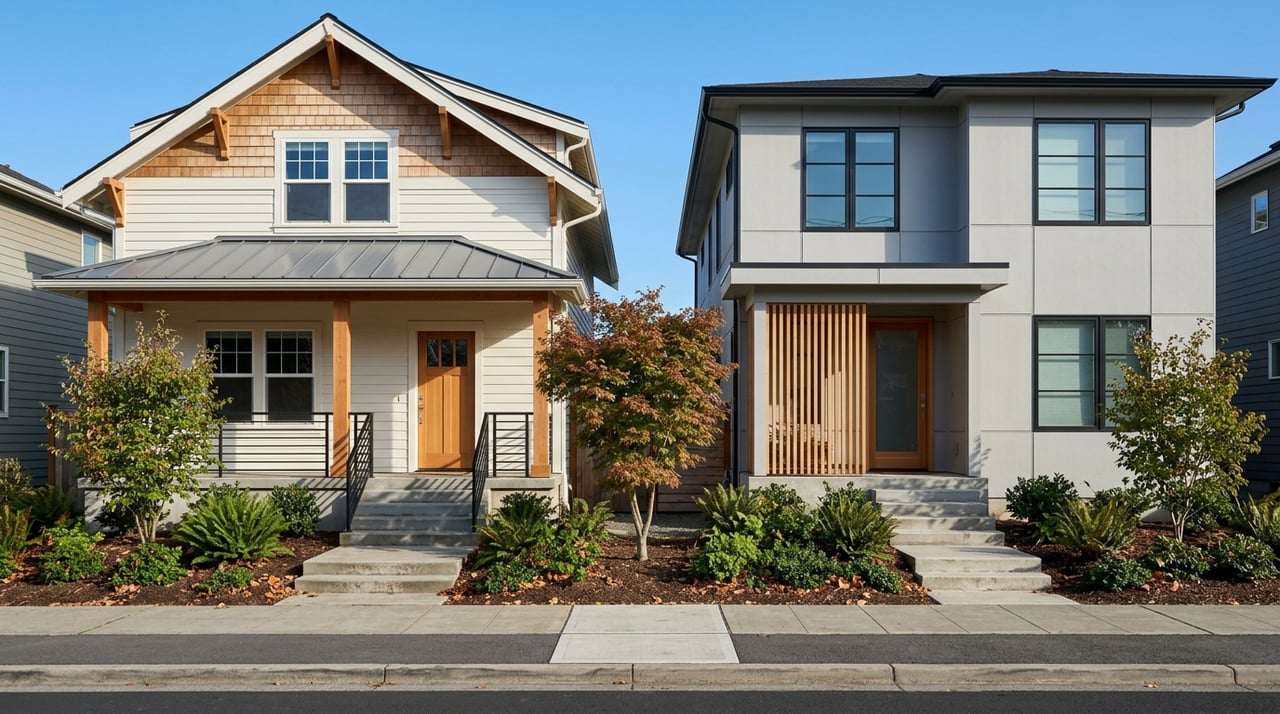
In practical terms, micro-neighborhoods shape value by changing what buyers are comparing. A home near a busy retail corridor, a historic district, or a transit-rich area may compete in a very different pricing tier than a similar home on a quieter interior street.
That is why broad ZIP averages can be helpful for context but weak for pricing strategy. If you are selling, you need to know which buyer pool your home fits. If you are buying, you need to know whether you are paying for square footage, location, walkability, historic character, or some combination of all four.
For many buyers, Foster-Powell helps define the pricing baseline for 97206. The neighborhood is often seen as a more value-oriented part of SE Portland, especially when compared with closer-in eastside areas.
The City of Portland’s Foster-Powell profile reports a $416,537 median home value, 67% homeownership, $81,000 median household income, and 19% tree canopy. The city also notes that this is a high-need canopy area where free street trees are being planted. On the mobility side, Walk Score ranks Foster-Powell at 86 for walkability and 99 for biking, which adds meaningful lifestyle appeal.
Recent sale activity reinforces that position. Redfin’s March 2026 snapshot places Foster-Powell around a $459,000 median sale price, up 3.7% year over year. That makes it a market where buyers may still find relative value, while sellers can point to strong access and neighborhood momentum.
In Foster-Powell, buyers often respond to a balance of price and convenience. The neighborhood offers strong bike access, useful walkability, and a price point that typically stays below many closer-in SE districts.
That does not mean every home should be priced from the same template. The wider 97206 ZIP is large enough that one section may behave differently from another, especially based on property type, updates, and exact location.
If you are selling in 97206, broad averages are only the starting point. The same Realtor.com overview for 97206 shows 76 days on market for current listings, while sold-price data points to a $456,500 median sale price.
That list-versus-sold gap is a reminder that pricing should be hyper-local. A home near a stronger corridor or with standout condition may attract a different response than another property just a few blocks away.
Move toward Reed and the comp picture changes quickly. This is not just a slightly more expensive version of 97206. It is a different micro-market with different buyer expectations.
The City of Portland’s Reed neighborhood profile describes a quieter residential area with a mix of original farmhouses, mid-century Cape Cod bungalows from the 1940s and 1950s, and ranch homes. The profile shows a $624,000 median home value, 45% homeownership, and $80,000 median household income.
Market activity also reflects that distinction. Redfin’s February 2026 data shows a $567,500 median sale price and 108 days on market for Reed. Walk Score lists the area at 61 walk, 45 transit, and 86 bike, which suggests that value here is often driven less by dense corridor retail and more by lot, condition, and residential setting.
In Reed, buyers are often evaluating a different kind of lifestyle tradeoff. They may place more weight on the home itself, the lot, and the feel of the immediate street than on being steps from a major commercial strip.
That means a seller in Reed should not rely on Foster-Powell comps, even if the homes share certain architectural features. The buyer pool is different, and that changes pricing behavior.
If you want a clear example of how the built environment affects value, look at Ladd’s Addition. This is one of the strongest cases in SE Portland where neighborhood identity creates a premium all its own.
According to the Ladd’s Addition conservation district guidelines, the district is Portland’s oldest planned community, originally platted in 1891 with a radial street plan, formal gardens, mature street trees, and rose gardens. The city’s conservation approach also emphasizes routing non-local traffic around the district rather than through it, which reinforces its distinctive feel.
That historic and physical character shows up in pricing. Redfin reports a $1,137,500 median sale price for Ladd’s Addition in March 2026, with homes averaging 32 days on market and a 98.1% sale-to-list ratio. Nearby Walk Score pages show 93 to 94 walk scores and direct MAX access, which helps explain why this small historic district can perform so far above the broader SE baseline.
Ladd’s Addition is not just another close-in neighborhood. It is a tightly defined historic district with a street pattern and identity buyers cannot easily replicate elsewhere.
That kind of scarcity matters. When buyers are drawn to preserved character, mature trees, and high walkability, the premium often reflects more than the house alone.
Some value premiums in SE Portland are driven less by formal neighborhood lines and more by corridor identity. Division and Clinton are strong examples.
The City of Portland’s Richmond neighborhood page notes that Richmond encompasses the Clinton and Division districts, along with Hawthorne. In 97214, neighborhood-level pricing already shows meaningful variation, with Richmond at $510,000 median home price and Hosford-Abernethy at $579,950, while Buckman and Sunnyside run higher.
This is where location can shift value within just a few blocks. Nearby Walk Score references for locations around SE 26th and SE Ladd/Caruthers show 93 to 94 walk scores, strong bike access, and nearby MAX Orange Line access, all of which support a walkability premium.
A similar-looking house can fall into a different pricing tier depending on whether it feels tied to restaurant and retail access, transit convenience, or a quieter residential setting. That is why two homes with comparable square footage may not belong in the same comp set.
For buyers, this is where the map gets especially important. For sellers, it is where pricing and marketing need to speak to the lifestyle the location actually offers.
If you are shopping in SE Portland, start by comparing micro-markets before you compare list prices. A lower price in one pocket may reflect a different walkability profile, a quieter street network, or a different housing stock rather than a simple bargain.
It helps to think in terms of tradeoffs:
When you view homes this way, you can better decide what you are actually paying for and whether it aligns with your priorities.
If you are preparing to sell, the big takeaway is simple: your home is not priced by ZIP code alone. It is priced by the buyer pool your location attracts.
That means your strategy should account for more than square footage and bedroom count. It should reflect whether your property benefits from corridor access, a historic district setting, a quieter residential location, or strong bike and transit convenience.
For an urban-focused seller, that is where polished positioning matters. The right pricing, presentation, and neighborhood framing can help buyers understand why your home belongs in one comp conversation and not another.
If you are thinking about buying or selling in Portland’s close-in neighborhoods, Erika Wrenn brings a calm, design-conscious approach to pricing, positioning, and full-service representation.
Stay up to date on the latest real estate trends.
Get assistance in determining current property value, crafting a competitive offer, writing and negotiating a contract, and much more. Contact me today.