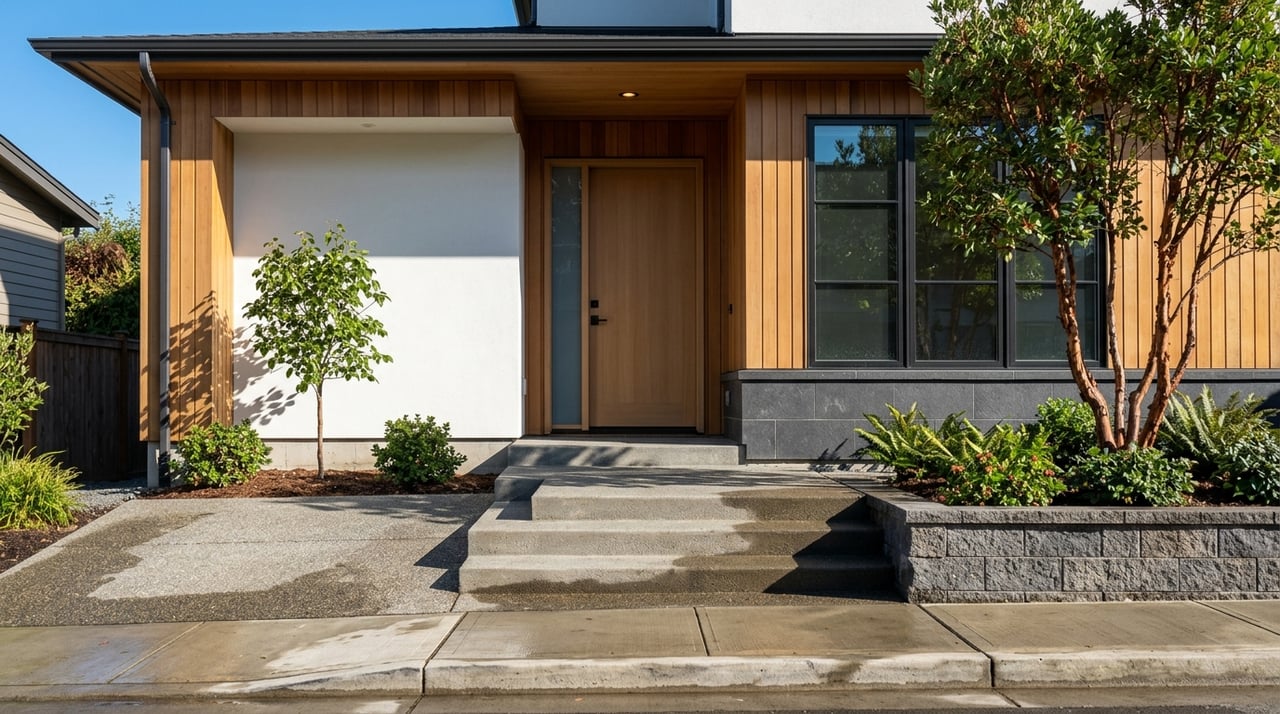
Your Moving to Portland Heights Guide for Buyers
May 7, 2026
May 7, 2026
Moving to Portland Heights can feel like choosing between two versions of Portland at once. You get close-in access to downtown, major parks, and city amenities, but you also get steep streets, forested surroundings, and a quieter residential setting that feels set apart. If you are considering a move here, it helps to understand how block-by-block differences shape daily life, home values, and the kind of property that fits your goals. Let’s dive in.
Portland Heights is generally understood as the northeastern part of Southwest Hills, above Goose Hollow and Downtown Portland. Historic and city materials describe it as close to the urban core but separated by a wooded hillside and a deep ravine bridged by Vista Bridge.
That geography helps explain the neighborhood’s character. Even though you are not far from downtown, Portland Heights can feel more tucked away and residential than many close-in Portland areas.
In Portland Heights, micro-location matters. Because the neighborhood climbs steeply from the city core, one street can feel very different from the next in terms of privacy, driveway access, and view exposure.
That means you should look closely at the exact block, not just the neighborhood name. A home with broad views may also come with more exposure, while a more sheltered lot may feel private but have a different light pattern or access experience.
Portland Heights remains mostly a single-family neighborhood. According to a state historic site summary, much of the housing stock was built in two main waves: the early 1900s and the 1920s.
Lots are typically about 5,000 to 10,000 square feet, and apartment buildings are rare. Common architectural styles include English Cottage, Colonial, Tudor, Foursquare, and Arts & Crafts.
If you are drawn to character homes, this is part of the appeal. Portland Heights has a long-established residential feel, with many homes shaped by hillside siting, mature landscaping, and architecture that reflects Portland’s early 20th-century growth.
Portland Heights is generally a premium submarket compared with Portland overall. Nearby West Hills neighborhoods show median Zillow Home Value Index figures of about $977,884 in Arlington Heights, $1,006,931 in Southwest Hills, and $1,012,374 in Hillside, while Portland overall is about $534,638 in typical home value and $501,133 in median sale price.
That does not mean every property in Portland Heights will land in the same range. It does mean buyers should be prepared for pricing that often reflects the area’s close-in location, established housing stock, lot position, and potential views.
Views are a major part of the Portland Heights story. Historic documentation for notable properties in the area highlights broad city and mountain outlooks, and hillside siting often plays a big role in how a home lives.
But views are not the only factor worth weighing. In practical terms, you may be balancing view exposure against privacy, yard usability, or easier access from the street.
If you are thinking about buying a home with plans for additions, exterior updates, tree work, or landscaping changes, ask about scenic-resource constraints early. Portland’s Scenic Resource zone uses view-corridor standards and height limits to protect significant views.
These rules can also affect landscaping and tree removal. For buyers, that means due diligence matters if you want flexibility for future exterior projects.
Portland Heights feels removed from downtown, but it still has useful transit connections. TriMet route 63 currently links the Washington Park area, including the International Rose Test Garden and Portland Japanese Garden area, with Providence Park and Pioneer Square.
TriMet also notes that its bus network connects with MAX, WES commuter rail, Portland Streetcar, and the Portland Aerial Tram. Depending on where you live and where you are headed, you may be able to mix driving and transit rather than relying on one option alone.
The neighborhood’s topography shapes more than views. It can also affect how you think about parking, driveways, walking routes, and the overall ease of getting in and out.
That is why commute experience here is highly block-specific. Before you buy, it is smart to test the route at different times of day and pay attention to how the home sits on the lot, how the driveway works, and how comfortable the surrounding streets feel for your routine.
One of the biggest draws of Portland Heights is access to major green space. Washington Park is a 410-acre destination with the Oregon Zoo, Hoyt Arboretum, the International Rose Test Garden, and the Portland Japanese Garden.
That gives you easy proximity to some of Portland’s most recognized outdoor and cultural destinations. It also means the neighborhood can feel closely connected to nature while staying near the city center.
Portland Heights Park is a 5.08-acre neighborhood park with a playground, basketball court, tennis court, soccer field, softball field, paved and unpaved paths, and an accessible restroom. Its playground project is scheduled for winter 2025 through summer 2026.
Council Crest Park is also nearby and known for wide-reaching views. City materials describe 180-degree views of five Cascade peaks from the park.
If you plan to spend a lot of time at Washington Park, it helps to know that parking can be limited. Washington Park recommends transit, and the MAX Red and Blue lines arrive every 15 minutes at Washington Park station. The park also uses a free seasonal shuttle.
For everyday living, that is less about avoiding the area and more about setting expectations. On busy weekends or event days, access and parking patterns around major destinations may feel different from a standard residential neighborhood.
If school assignment is part of your home search, verify it by property address before you make a decision. Portland Public Schools says every K-12 student has a neighborhood school based on home address, and its School Finder shows current attendance boundaries.
The district also notes that maps can change as rightsizing work evolves. In other words, neighborhood assumptions are not enough here. You will want address-level confirmation.
Ainsworth Elementary is a nearby west-side K-5 school that many buyers pay attention to when looking in Portland Heights. Portland Public Schools describes Ainsworth as a Southwest Hills school with English and Spanish Immersion programs.
The district says the Spanish Immersion pathway continues from Ainsworth to West Sylvan Middle School and Lincoln High School. As with any school assignment, exact eligibility should be verified directly by address.
Because Portland Heights varies so much from one property to another, a thoughtful home search matters. A few practical questions can help you narrow the right fit.
Portland Heights can be a strong fit if you want a close-in Portland location with a quieter, more residential setting. It may also appeal to buyers who value historic architecture, established lots, and access to major parks.
At the same time, it is usually not a plug-and-play neighborhood. The hillside terrain, price point, lot-specific tradeoffs, and possible scenic-resource constraints make careful evaluation especially important.
If you are considering a move to Portland Heights, the biggest takeaway is simple: this is a neighborhood where details matter. Two homes that seem similar on paper can offer very different day-to-day experiences based on their street, lot position, access, and relationship to views.
For buyers who like character, proximity to nature, and a more tucked-away feel near downtown, Portland Heights can offer a compelling mix. If you want help comparing homes, understanding how location affects livability, and making sense of the tradeoffs that come with hillside living, Erika Wrenn offers calm, high-touch guidance tailored to Portland buyers.
Stay up to date on the latest real estate trends.
Get assistance in determining current property value, crafting a competitive offer, writing and negotiating a contract, and much more. Contact me today.