South Waterfront Condos for OHSU Professionals
July 2, 2026
July 2, 2026
If your workday starts at OHSU, where you live can shape everything from your morning routine to how much free time you actually get back. South Waterfront stands out for one simple reason: it offers one of Portland’s shortest and most practical condo-to-campus commutes. If you are weighing convenience, building style, and everyday livability, this guide will help you understand what living here really looks like. Let’s dive in.
South Waterfront was redeveloped from an industrial riverfront into a dense mixed-use district with residential towers, green space, pedestrian connections, and OHSU campuses nearby. City planning materials describe it as a transit-oriented area with a connected street grid and walkable circulation, though some northern blocks are still evolving through phased development.
For many OHSU professionals, that planning shows up in daily life as convenience. You are not just close to work. You are living in a neighborhood that was shaped around moving easily by foot, streetcar, bike, and tram.
The Portland Aerial Tram is the biggest reason many buyers look at South Waterfront first. OHSU states that the tram connects South Waterfront directly to Marquam Hill, where the hospital, physician clinics, research labs, and medical and dental schools are located.
OHSU also describes the tram as a 4-minute ride that runs every 5 minutes. For OHSU members and patients, it is free with a badge or courtesy ticket. If your goal is to cut down commute stress, that is a major quality-of-life advantage.
South Waterfront also sits on the Portland Streetcar NS line. Portland Streetcar describes the NS line as a 4-mile route running from NW 23rd Avenue through the Pearl District and Portland State University to South Waterfront.
That gives you another easy option for central city trips and connections beyond the neighborhood. If you prefer to keep driving to a minimum, South Waterfront supports that choice better than many other Portland condo areas.
South Waterfront is mostly a tower neighborhood. If you are hoping for a classic low-rise condo district with many smaller buildings, this is not really that market.
Instead, you will find a skyline defined by high-rise living, riverfront views, and building-by-building amenity packages. For buyers who like a more vertical, polished, urban feel, that can be a strong match.
One of the most important things to know is that South Waterfront does not offer a single condo experience. Each building has its own character, layout mix, parking setup, and shared amenities.
That matters because two buildings on nearby blocks can feel very different in daily use. Your best fit may come down to details like lobby service, elevator access, pet policies, outdoor common space, or whether a building feels more private or more active.
Atwater Place is described by its architects as a 23-story condominium tower with 214 units, street-level retail, below-grade parking, balconies, and LEED Gold certification. John Ross is described as a 31-story point tower with a 4-story podium, below-grade parking, a public plaza, and retail.
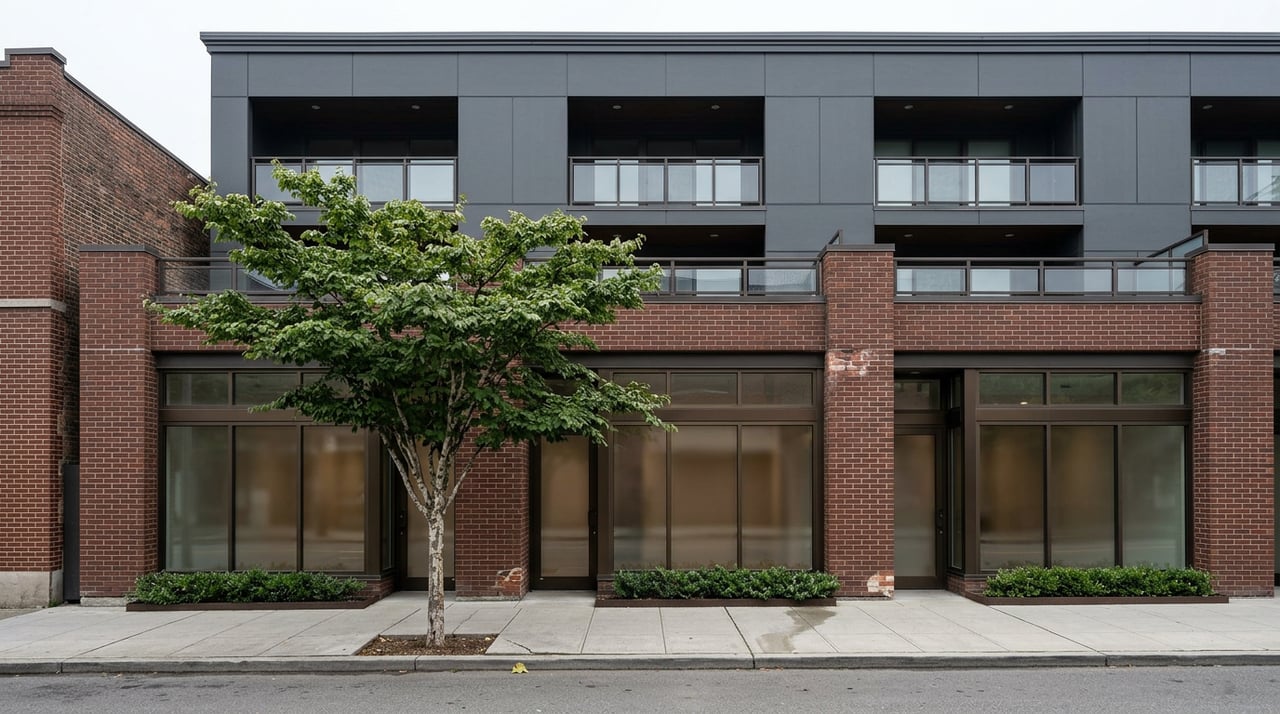
The Meriwether includes two slim high-rise towers with street-level townhouses and shared greenspace. Together, these examples show the pattern of the neighborhood: mostly towers, some mixed-use ground floors, and occasional ground-oriented units woven into a vertical district.
Amenity packages in South Waterfront are building-specific, which is worth keeping in mind if you are comparing condos online. The John Ross site highlights features such as a 24/7 attended lobby, high-speed elevators, outdoor lounge and dining areas with barbecue space, a fitness center, secured parking, and pet-friendly policies.
That does not mean every building offers the same setup. It does mean buyers should look closely at each building rather than assume all South Waterfront condos function alike.
South Waterfront tends to feel practical, compact, and efficient. It is not trying to be a giant retail district. Instead, it offers a neighborhood-scale mix of everyday businesses that can cover a lot of your regular needs.
The local directory includes coffee, pizza, Lebanese food, donuts, bistros, deli options, poke, burgers, coffee and tea shops, a grocery and mart, storage, salons and spas, dental and eye care, pet care, and fitness businesses. For many busy professionals, that kind of nearby convenience matters as much as square footage.
If you like the idea of handling small daily tasks without a long detour, South Waterfront makes that easier. You may not have a large shopping center in the neighborhood, but you do have a practical cluster of services within a compact area.
That setup often works well for people with demanding schedules. You can grab coffee, pick up a few groceries, take care of a personal errand, and still stay close to home and work.
South Waterfront can look institutionally focused at first glance because of its OHSU connection, but it also has a real neighborhood rhythm. The South Waterfront Farmers Market runs on Thursdays from June through October, from 12:00 pm to 5:00 pm, at Elizabeth Caruthers Park.
South Waterfront Community Relations describes the market as a neighborhood evening market created to connect farmers and urban residents. That kind of recurring event helps the area feel more lived-in and community-oriented, not just work-adjacent.
One of the best parts of living in South Waterfront is that your urban setting still comes with meaningful outdoor access. The neighborhood transportation and parks information points to riverfront paths, bike routes, and public green space that make it easy to decompress before or after work.
If your job is intense, having a simple outdoor reset nearby can be a real benefit. In South Waterfront, that can mean a walk by the river, a bike ride, or just a quiet bench with an open view.
The South Waterfront Greenway stretches from the Marquam Bridge south to the River Forum Building and includes an accessible paved pedestrian pathway along the river. Portland Parks also says South Waterfront Park connects RiverPlace Esplanade to Tilikum Crossing and offers paved paths, benches, restrooms, nearby shops and restaurants, and year-round public river access.
That gives you an easy way to add movement and fresh air to your day. For condo buyers, nearby outdoor space can help balance the compact footprint of vertical living.
For people who bike or walk regularly, the neighborhood offers several useful links. Local transportation pages highlight the Gibbs Street Pedestrian Bridge, the 40-mile bike loop, bike lanes on SW Moody and SW Bond, and a free public bike valet at the tram.
Those details reinforce the same theme seen throughout South Waterfront: the area supports a low-car routine well. If that lifestyle matters to you, this neighborhood has the infrastructure to make it realistic.
No neighborhood is one-size-fits-all, and South Waterfront has a few nuances worth knowing before you buy. The biggest is that while much of the area feels established, not every block feels equally finished.
City project pages note that most of South Waterfront south of Gibbs has an established grid, while infrastructure north of Gibbs is still tied to phased development and street extensions. In practical terms, one block may feel complete and polished while another may feel closer to active development.
South Waterfront covers many day-to-day needs, but it does so at a neighborhood scale. If you want an area with a much broader retail mix right outside your building, you may find this district more streamlined than expansive.
For many OHSU professionals, that is a fair trade for the commute and riverfront setting. Still, it is helpful to match your expectations to the neighborhood’s actual rhythm.
Because South Waterfront is so tower-oriented, your lifestyle experience may depend heavily on the specific building you choose. The right fit is often less about the neighborhood in general and more about how a building’s layout, services, parking, and amenity package match your routine.
That is especially true if you are deciding between view-oriented living, lock-and-leave simplicity, or a more service-forward building experience.
If you work on Marquam Hill and want a very short, straightforward commute, South Waterfront deserves serious attention. The aerial tram alone gives the neighborhood a practical edge that is hard to match elsewhere in Portland.
It can be especially appealing if you value modern condo living, easy riverfront access, and a routine built around walking, biking, and transit. If that combination fits your priorities, South Waterfront may feel less like a compromise and more like a smart lifestyle choice.
If you want help comparing South Waterfront buildings, evaluating condo resale potential, or finding the right fit for your work-life routine, Erika Wrenn offers thoughtful, neighborhood-focused guidance for Portland’s urban condo market.
Stay up to date on the latest real estate trends.
Get assistance in determining current property value, crafting a competitive offer, writing and negotiating a contract, and much more. Contact me today.